
 Diella Teku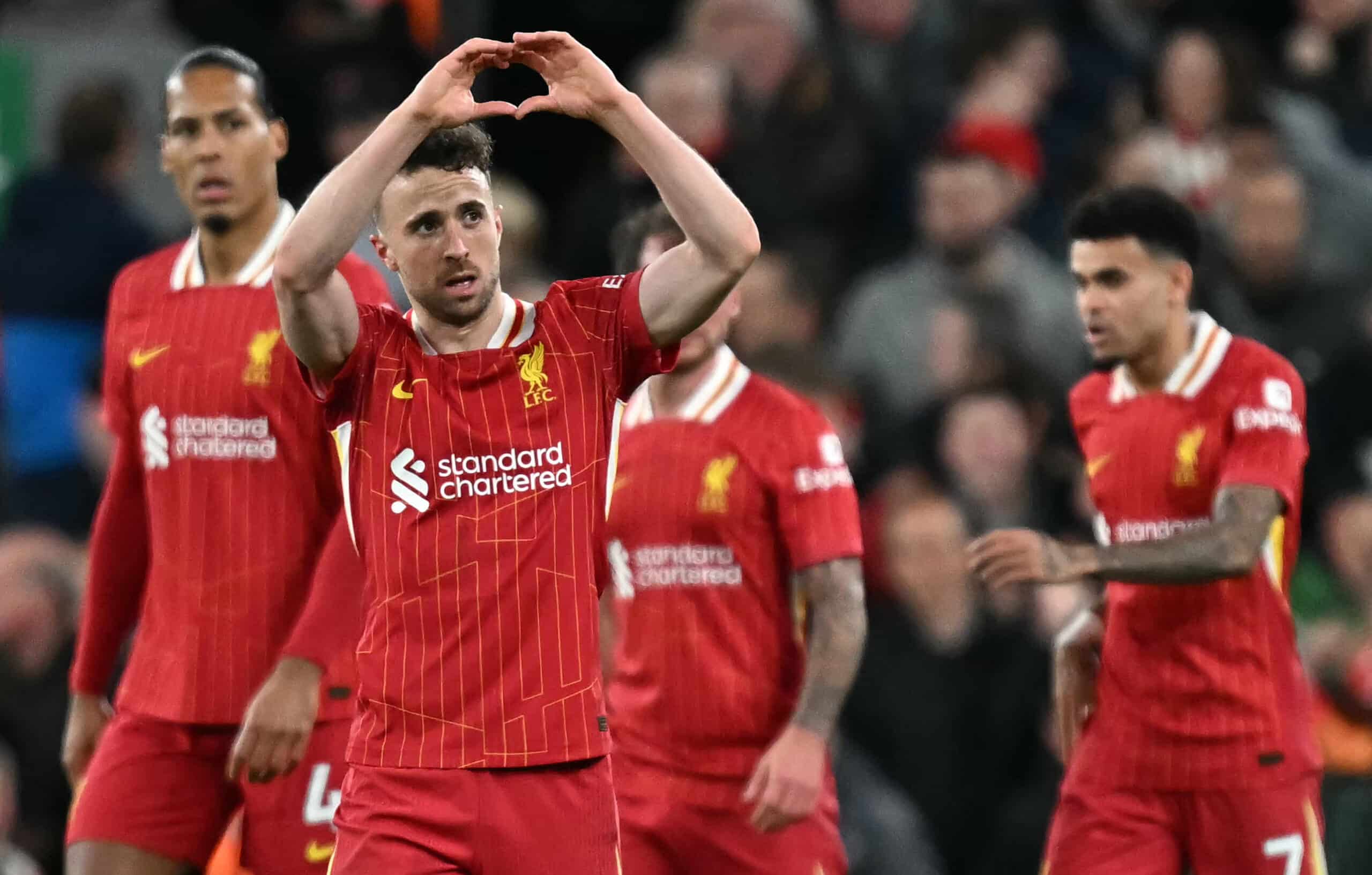
From a quiet suburb in Porto to the roaring stands of Anfield, from humble beginnings at Paços de Ferreira to the ecstasy of lifting silverware with Liverpool and Portugal, Diogo José Teixeira da Silva—better known to the footballing world as Diogo Jota—was not just a footballer. He was a force of will. A player who defied rejection, outpaced expectation, and inspired a generation. On July 3, 2025, that journey was tragically cut short in a car crash that also claimed the life of his younger brother, André Silva. But what he left behind is nothing short of legendary.
Born on 4 December 1996 in Porto, Portugal, Jota’s early life was marked by the kind of grit that would come to define his playing style. As a boy at Gondomar, he played football with more fire than flair, overlooked by scouts who deemed him too small. Yet, behind the slender frame was a relentless work ethic—and a vision that would eventually pull him through every closed door. At 17, he moved to Paços de Ferreira, where his talent was undeniable. He made his senior debut at just 17, scored his first Primeira Liga goals at 18, and quickly became the youngest player to ever score for the club in Portugal’s top flight.
Jota was not only climbing the ranks but rewriting scripts. Despite being a top-flight player, he stayed in club dormitories, learning foreign languages, preparing for a life abroad. His heart was once diagnosed with an irregularity; he missed a month of training, but never let it rattle his resolve. When his manager compared him to Cristiano Ronaldo, it wasn’t hype—it was prophecy.
In 2016, Atlético Madrid came calling. Though he never played a competitive match for them, his loan spell at FC Porto revealed his class. A stunning hat-trick against Nacional and a Champions League goal against Leicester City elevated him from promising to proven. But it was in England, first with Wolverhampton Wanderers, that the legend of Diogo Jota began to truly take form.
Signed on loan in 2017, Jota’s 17 goals in the EFL Championship pushed Wolves into the Premier League, earning him a permanent €14 million transfer. There, in the land of fierce defenders and fast transitions, Jota thrived. He wasn’t just a goal scorer—he was a match-winner. A hat-trick against Leicester City in 2019 etched his name in Wolves folklore. His 44 goals in 131 appearances redefined the club’s ambitions.
But his most transformative chapter came in 2020, when Liverpool—fresh off a Champions League title—invested £41 million in Jota. It was Jürgen Klopp’s masterstroke. In a team stacked with stars, Jota was never content with being a supporting act. He scored on his Premier League debut, struck a hat-trick in the Champions League against Atalanta, and became the club’s 10,000th goalscorer. Injury setbacks interrupted his rhythm, but he always returned stronger, hungrier.
By the time he lifted the 2025 Premier League trophy, his fourth title with Liverpool, Jota had become more than just a name on the team sheet. He was Liverpool’s unyielding pulse when others faltered. His final goal—fittingly, a winner in a Merseyside Derby—was a parting gift only fate could script.
Internationally, Jota was a vital piece in Portugal’s golden era, earning 52 caps and scoring 17 goals. He lifted the UEFA Nations League twice—first in 2019, and again in 2025, in what would unknowingly become his final game. His ability to wear the national shirt with pride, to shoulder responsibility in big moments, made him one of Portugal’s most trusted attackers.
Off the pitch, Jota was just as fascinating. He was not one for champagne celebrity; he lived privately, stayed loyal to childhood friends, and married his high school sweetheart, Rute Cardoso, on 22 June 2025—just eleven days before his death. They had three children together. He was also a FIFA eSports star, briefly ranked world No. 1, and owner of the Luna Galaxy team. During lockdown, fans around the globe watched him compete online—a refreshing reminder that Jota was as down-to-earth as he was driven.
But life, often cruel in its unpredictability, had a different plan. Days after his wedding and a minor lung procedure in Porto, Jota opted to drive through Spain to catch a ferry back to England—doctors had advised against flying. In the early hours of 3 July 2025, tragedy struck. The Lamborghini Huracán he shared with André suffered a tyre blowout and veered off the A-52 motorway near Cernadilla. The car caught fire. Neither survived.
The shock reverberated across continents. Football clubs held minutes of silence. Stadiums lit up with tributes. Social media overflowed with disbelief and grief. In Gondomar, where it all began, thousands gathered for his funeral. Teammates past and present—from Rúben Neves to Virgil van Dijk—carried his memory with tears and flowers. He and his brother were buried side by side.
Diogo Jota died at 28, in the prime of his life. But what he achieved in that time, many can only dream of. He was the proof that raw ambition, when matched with humility and hunger, can transcend even the highest obstacles. From a rejected teen with a “small frame” to a Portuguese and Liverpool hero, his life story is one of rise, resilience, and remarkable impact.
In the end, he wasn’t just “Diogo Jota.”
He was Diogo Just-unforgettable.
And though he left us far too soon, he left us inspired.