



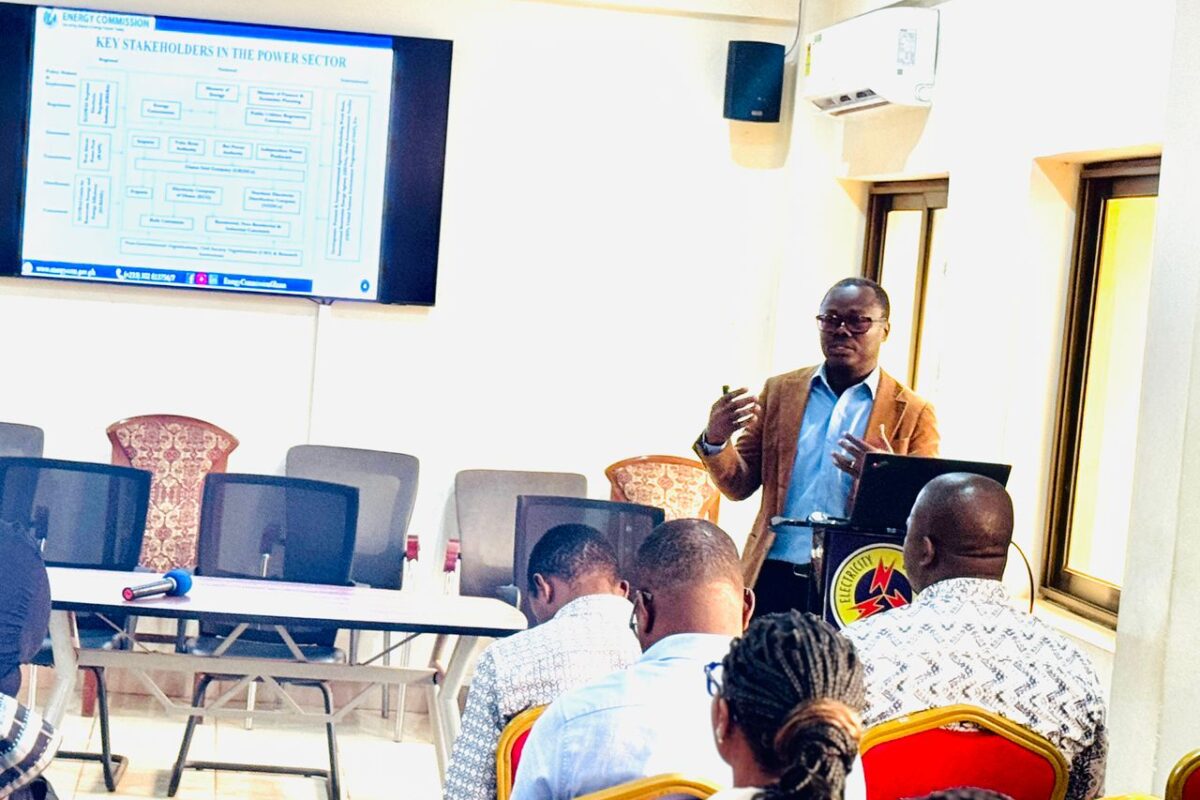
The Energy Commission (EC) has held a strategic stakeholder engagement with the Electricity Company of Ghana (ECG) in Ashanti West Region to strengthen the implementation of the Electrical Wiring Regulation, 2011 (L.I. 2008). This forms part of the Commission’s ongoing nationwide tour to sensitize ECG operational areas on proper electrical wiring practices and the digitization of the certification process for electricians and inspectors.
The Electrical Wiring Regulation, passed into law in 2012, aims to address the rising incidents of electrical fires in Ghana by ensuring that only qualified and certified professionals handle wiring and installation works. The regulation also sets clear standards to safeguard human lives, livestock, and property from electrical hazards.
Welcoming participants, Ing. Emmanuel Osei Amoako, Acting General Manager of ECG Ashanti West Region, expressed gratitude to the Energy Commission for honoring ECG’s call for engagement. He highlighted the critical role the Commission plays in regulating ECG’s technical activities, including service connection standards and power supply quality.
Providing regulatory insights, Ing. Stephen N-ebe Yomoh, Assistant Manager in the Electrical Wiring Section at the Energy Commission, outlined that under L.I. 2008, there are two groups of electricians — compliant and non-compliant. Only the compliant, those licensed by the Energy Commission are legally permitted to conduct electrical wiring.
He explained that before applying for a meter at ECG, customers are required to engage Certified Electrical Wiring Professionals (CEWPs) to carry out wiring on their premises. Applications must be supported with stamped forms from both the CEWP and a Certified Electrical Wiring Inspector.
“Without these stamped forms, ECG cannot legally process a meter request,” he emphasized.
Ing. Yomoh further clarified that customers are only responsible for paying the Certified Electrical Wiring Professional (CEWP), not the inspector. The responsibility for paying the inspector lies with the electrician. He acknowledged issues where non-compliant electricians have passed on these charges to customers, stressing the importance of using only licensed professionals.
He urged the public to report unlicensed electricians and avoid engaging their services, highlighting that proper wiring ensures safety and compliance.
“Customers must always verify the certification of any electrician before allowing them to work,” he said. “The Energy Commission has made this easier through the launch of a Certified Electrician App and a publicly available list on our website.”